LinkedIn releases AI-Powered People Search
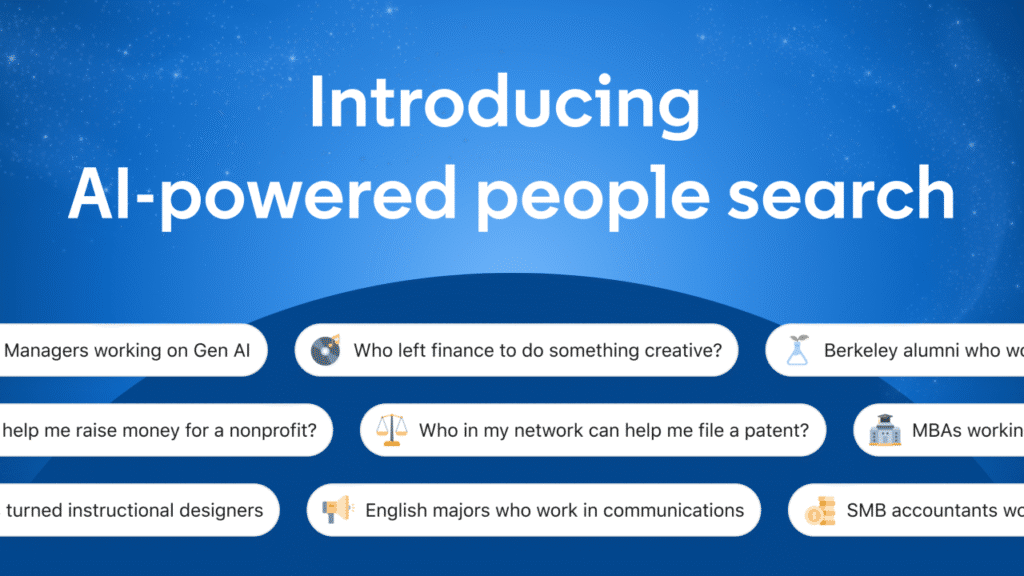
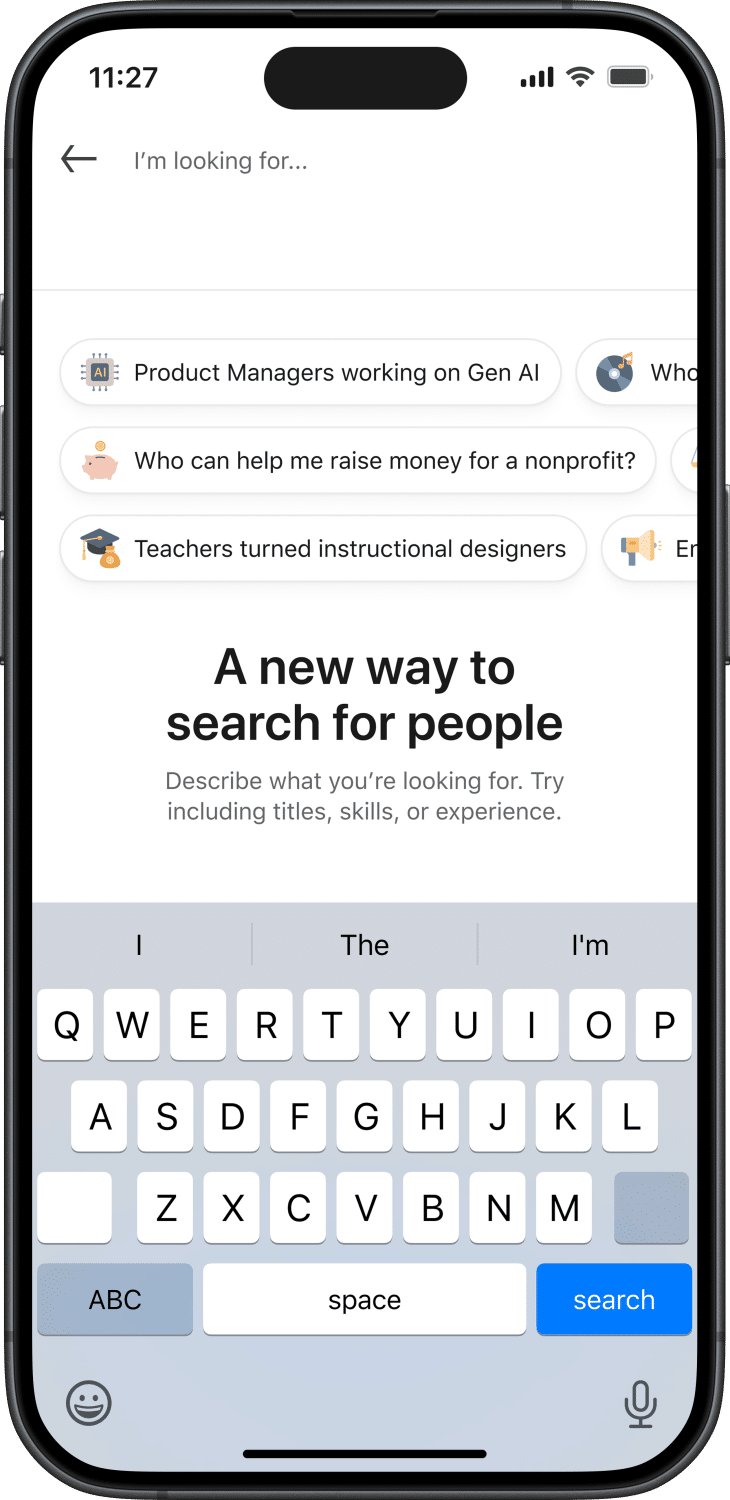
LinkedIn has just announced a hugely significant change in the way that search works on the platform. With AI Powered People Search, you'll be able to enter natural language queries to find people. For example: your search entry becomes “UC Berkeley alumni who work in healthcare or biotech” or “Who in my network can help me file a patent for my business?”
And you get people as answers. Forget complex boolean operators and endless scrolling through search results / profile view / search results. This is a fundamental ground shift in the way you find people on LinkedIn, and in my opinion, the most fundamental change since LinkedIn search was first operational back in 2003.
Only available in the US to Premium Members right now...
For the moment (writing on 13th November 2025) this feature is only available to Premium LinkedIn Members in the USA, but it's due to roll out "soon" to other areas. And if it remains a premium-only offering, it's looking like a very compelling reason to upgrade.
From Gyanda Syncheva, VP of Product's article:
Introducing AI-Powered People Search
With AI-powered people search, we’re building the fastest path to the person who can help you most on LinkedIn. Not just search results—but trusted wisdom, lived experience, and real opportunity. You can now simply type who you are looking for in the same way you would say it out loud and we’ll understand the intent of your search to surface relevant people who can help.
This is the LinkedIn network unlocked. Powered by AI, enriched by trusted professional data from 1.3 billion members, and rooted in the strength of your network, LinkedIn AI-powered people search will unlock our ability to connect members to opportunity.
Whether you’re launching a business, switching careers, or just figuring out your next move—there’s someone out there who’s done it, lived it, and can help you get there.
Now, you can find them.
I’m excited for you all to play with it. We’re starting to roll out to Premium subscribers in the U.S. and will continue to iterate, so whenever you need to find someone who can help you take the next step, we’ll be there to help you find them.
I'm of course going to be monitoring this very closely, and working to establish how your profile can be best optimised for AI search:— I suspect your 'about' section is going to be pivotal, and may need strategic rewording, along with potentially more standardised job titles, or job titles that also include keywords as a trailer element.
Looking at this as a LinkedIn profile-writing specialist who cares about the future of search, a few things are obvious:
1. LinkedIn just turned profiles into training data for an answer engine
This is no longer “type job title + location + a couple of keywords and hope”. LinkedIn is moving from lexical search (exact words, filters, Boolean) to semantic search (intent, meaning, relationships).
That means:
- The system is trying to understand who you help, in what context, and with what track record, not just what your headline says.
- Your profile is effectively a structured dataset that feeds an AI ranking model.
Vague, fluffy profiles won’t just be “a bit weaker” – they’ll be invisible.
2. You now write for queries, not just for keywords
Ask: What will someone actually type into that “I’m looking for…” box?
It will sound like:
- “Someone who’s scaled B2B SaaS content from 0–100k organic visits”
- “A CMO with IPO experience in London fintech”
- “A manufacturing automation expert who’s implemented Krones and Sidel lines in Europe”
So profiles need to:
- Spell out outcomes, not duties: “Grew inbound pipeline by 143% in 12 months” is what gets matched to “grow pipeline”, “increase inbound”, “demand gen”, etc.
- Explicitly mention domains, tools, frameworks and constraints – e.g. “FCA-regulated fintech”, “GDPR-heavy environments”, “HubSpot + GA4 + Salesforce,” “FDA submissions,” “Series B SaaS.”
If it’s not written down, you’re betting that LinkedIn’s AI will guess it from context. Bad bet.
3. Headline hacks and keyword stuffing are finished
In a lexical world, you could play games with:
“Marketing Director | CMO | Fractional CMO | Growth | Demand Gen | RevOps | SaaS | B2B”
In an AI search world, that looks like noise.
For future-proof profile writing:
- One clear primary identity: who you really are in this market.
- One clear value proposition: who you help, with what, and why you’re credible.
- Natural language that reads like something a real human might type into a search box.
Think: “If someone described me to an AI, would it use this wording?”
4. Every section becomes a signal – or dead weight
If LinkedIn is letting people ask nuanced questions about experience and capability, then:
- Experience bullets need to be written like mini case studies, not job descriptions.
- Skills need to be curated, not bloated – 15 sharp, accurate skills beat 50 random ones.
- Recommendations become training examples of “this person helped me achieve X in Y context”.
Sloppy sections (“responsible for”, “worked on various projects”, “involved in”) are going to be meaningless to AI. The machine is looking for who did what for whom with what result.
5. AI-generated vanilla profiles will sink; crafted specificity will rise
The flood is coming: thousands of AI-written profiles that all say:
“Passionate, results-driven professional with a proven track record of driving growth and delivering value…”
In a semantic search system, that’s statistical wallpaper.
What will stand out:
- Specific numbers and named outcomes.
- Concrete niche language (“tri-block canning lines”, “multilingual localisation at scale”, “SME lending risk models”, etc.).
- Clear narrative through-line: your career actually tells a coherent story.
Ironically, the more people let AI churn out generic mush, the more valuable real, differentiated profile writing becomes.
6. This is LinkedIn’s version of Answer Engine Optimisation
Google is shifting from “ten blue links” to AI answers. LinkedIn is doing the same, but the answer is a person, not a web page.
So for profile strategy over the next 2–3 years, I’d treat it like this:
- Define the questions you want to be the answer to
“Who can help us fix X?” “Who understands Y niche?” “Who has done Z before in [sector]?” - Engineer your profile around those questions
Make sure your About, Experience, Skills and Recommendations all contain the language, entities and outcomes that line up with those questions. - Assume cross-graph reasoning
LinkedIn’s AI will increasingly reason over your network and interactions, not just your static profile text.
That means engaging with the right topics and people isn’t just “personal branding” – it’s ranking fuel.
7. Practically, what would I change in profiles starting now?
If I’m writing or rewriting profiles in light of this shift, I’d:
- Rebuild the headline around who you help + what outcome + where/for whom. (So no radical departure there).
- Rewrite About to answer:
- Who you serve
- What specific problems you solve
- What proof you have (numbers, names, niches)
- Refactor Experience into clear, scannable case-study bullets: action + context + metric.
- Tighten Skills down to the strongest, most defensible 10–20 that match the queries you care about.
- Actively curate Recommendations that say “David helped us do X in Y situation” rather than generic praise.
- Align content activity (posts, comments, articles) with the themes you want to be discoverable for.
What's the bottom line for LinkedIn's New Ai Powered People Search?
LinkedIn just told us where search is going on their platform: away from filters and titles, toward intent-driven, AI-mediated matching. If your profile still reads like a fuzzy CV from 2014, you won’t just be “less visible” – you’ll be functionally unsearchable for the opportunities you actually want.
